Decks the agents draft
The engagement-drafter writes a short deck only when there is something an email cannot carry. These are its decks on the Tallyroot demo, checked by the evidence-verifier. Every word on a slide is the agent’s; the pack’s scripts only lay it out. Nothing here was sent.
Source: showcase/examples/agent_runs/decks in the pack: the deck specs, the plans, the drafts and the verdicts, as the agents and scripts made them.
/prep <account> deck, as a demonstration. The agent still chose the shape and wrote every word, and said in each plan that a deck was requested and how little it adds. The verifier failed the first version of 3 of them; the versions shown are the revised ones it passed. The slides use the pack’s neutral default look; the footer on each slide is a line the drafter writes from the CSM’s name from set-up and the customer’s company name (fictional here), checked by the verifier; no script writes it, and the CSM confirms it before the deck is used. The earlier verdicts kept beside each deck may quote an older footer. The customer and everyone in it are invented; this page shows only the customer copy, never the CSM’s copy with notes and evidence.qbr-builder skill. The demo fires no business-review action for it, so, like the others, it was requested the way a CSM would with /prep <account> qbr; the daily scan would draft one by itself when the qbr play fires for a white-glove account, and hold it for the CSM. It travels with an internal note to the CSM, not a customer email. It was made on the pack as it is now (deck checks K1 to K12, review facts), the agent was given only the account and the request, and every word on a slide is its own. The verifier failed the first version: a speaker note quoted a seasonality note that no fact on the sheet carried. The agent removed it once and the second check passed. The customer copy shows only what is safe to show; the CSM-only appendix, speaker notes and any status that is the CSM’s read are not published here. The demo’s data is thin, so the deck says what the facts support, marks what is “not available” and asks the customer for the rest. A review deck that was not published: Meridian Quay Building Services failed the verifier twice (it wanted two headings that said the customer set an outcome and that no reading existed, reworded as questions). The pack’s rule after two fails is to leave the files and say the deck is not verified, so it is not shown here. The renderer draws bar charts from zero.Also on the site: a meeting deck the agent drafts, for a customer call, on the device-priced example company.
And a leave-behind the agent drafts, a PDF the customer reads alone, on the usage-priced example company.
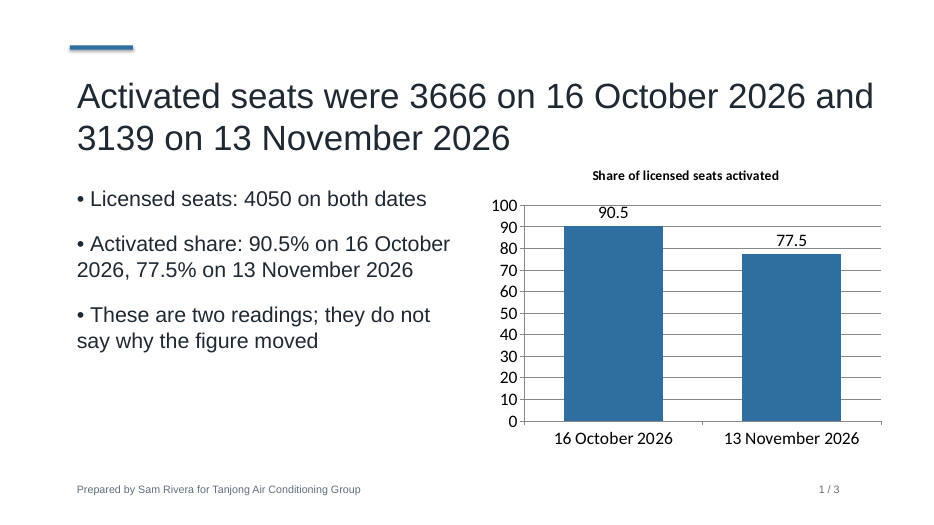
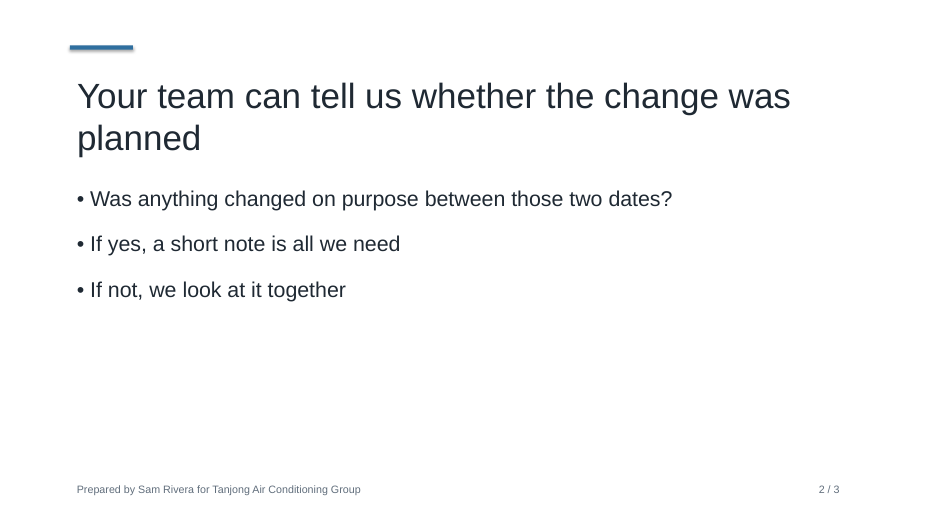
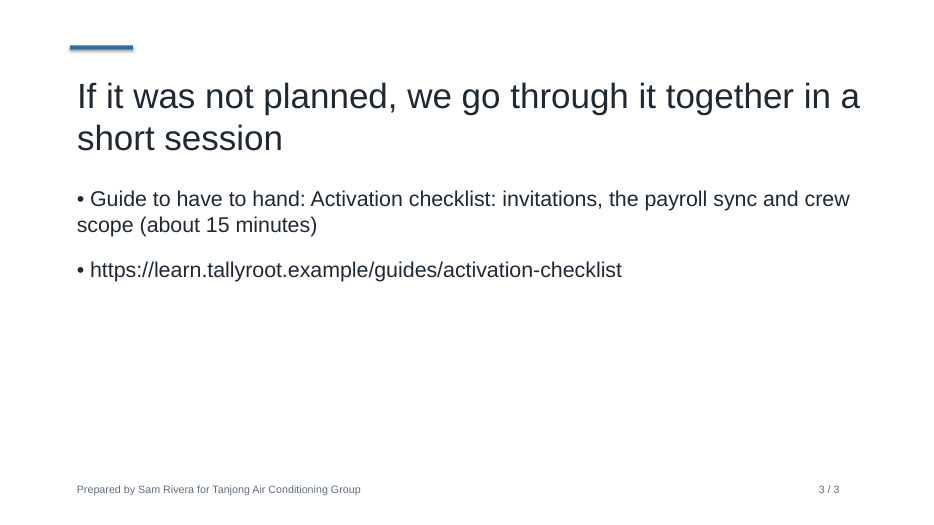
Tanjong Air Conditioning Group: 3 slides, Fix deck
Verifier: pass Held for the CSM: never sent
What it is for. Put two dated seat readings on screen with the admin and agree how to find out together whether the change was planned.
Why this shape. A figure moved and the reason is unknown; the useful thing is to look at it together. Education and a question, no pitch. Left out on purpose: Any cause, renewal timing, scores, status, the unused crew_groups feature, and any readings beyond the two (the sheet has no customer-safe weekly series to chart).
Download .pptx (customer copy) · Download PDF · Deck spec (what the agent wrote) · The email it goes with · The agent's plan · Verifier verdict
Source: decks/001TR00040000DUMMY-seat-change.deck.json written by the engagement-drafter; laid out by scripts/render_deck.py; previews by scripts/deck_previews.py; verdict recorded by the evidence-verifier.
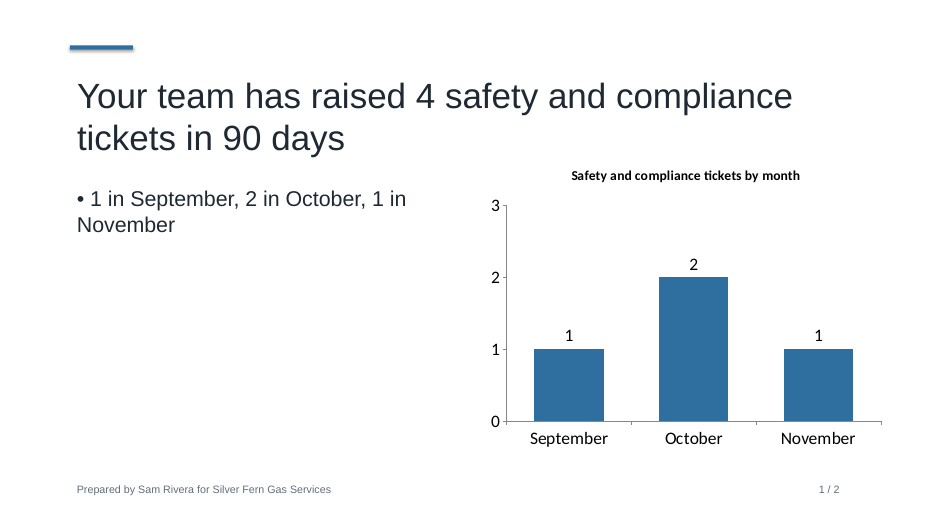
Silver Fern Gas Services: 2 slides, Fix deck
Verifier: pass Held for the CSM: never sent
What it is for. Give the team one page showing the shape of their safety and compliance questions and a single place to start answering them.
Why this shape. The customer-safe facts show a repeated question pattern and one matching guide. They hold no stated date or purchase need, so this is education, not a pitch. Left out on purpose: The audit date and anything from the call (not customer-safe). Any product the account does not own. The cost estimate (below the minimum for customer copy). Claims about what the guide's steps do beyond its title.
First check: fail The verifier stopped the first version of this draft and deck: J1: Supported: 4 safety and compliance tickets in 90 days (F23), the 15-minute compliance evidence guide and link (F35), Imran and Daniel (F4, F3), Tallyroot Dispatch and 320 seats (F5), deck monthly split (F22). Unsupported: email paragraph 1 sentence 2, Questions like these usually come down to sh… The drafter revised it once, and the verifier then passed the version shown here. The first verdict.
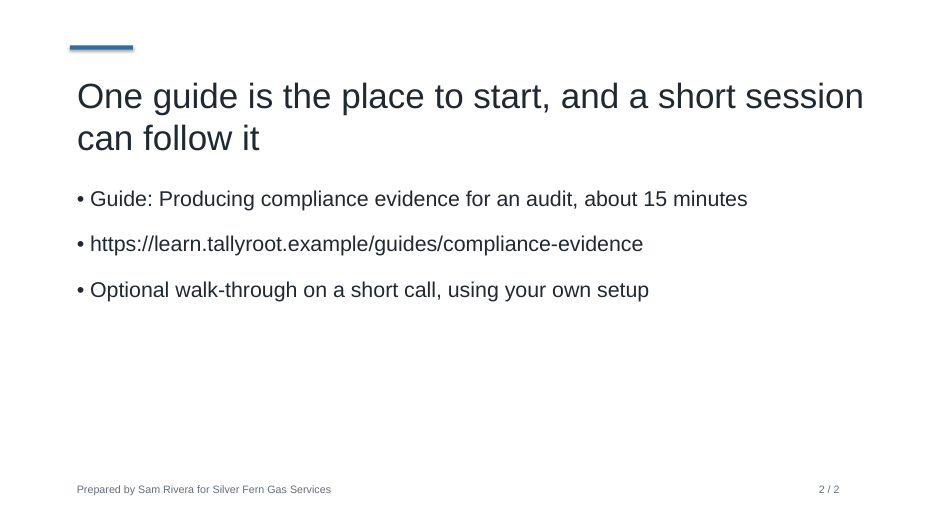
Download .pptx (customer copy) · Download PDF · Deck spec (what the agent wrote) · The email it goes with · The agent's plan · Verifier verdict
Source: decks/001TR00260000DUMMY-compliance-evidence.deck.json written by the engagement-drafter; laid out by scripts/render_deck.py; previews by scripts/deck_previews.py; verdict recorded by the evidence-verifier.
Hilltop Window Cleaning: 2 slides, Fix deck
Verifier: pass Held for the CSM: never sent
What it is for. Name a repeated how-to question and agree the quickest way to settle it with the Dispatch team.
Why this shape. A repeated how-to question is a training need, not a fault; education only, nothing is being sold. Left out on purpose: The topic and any resource: the facts disagree on the topic, so none is stated. Growth or product talk. Scores, NPS, renewal timing, channel. Any claim on how a feature behaves.
First check: fail The verifier stopped the first version of this draft and deck: J1: Body paragraph 1 (how to build a crew group for inactive crew members), the subject (video on building crew groups) and deck slides 1 and 2 state the topic of the repeated question from F19, but the account records contradict it: all five tickets in the 90 days (48084, 48085, 48086, 48087, 48088… The drafter revised it once, and the verifier then passed the version shown here. The first verdict.
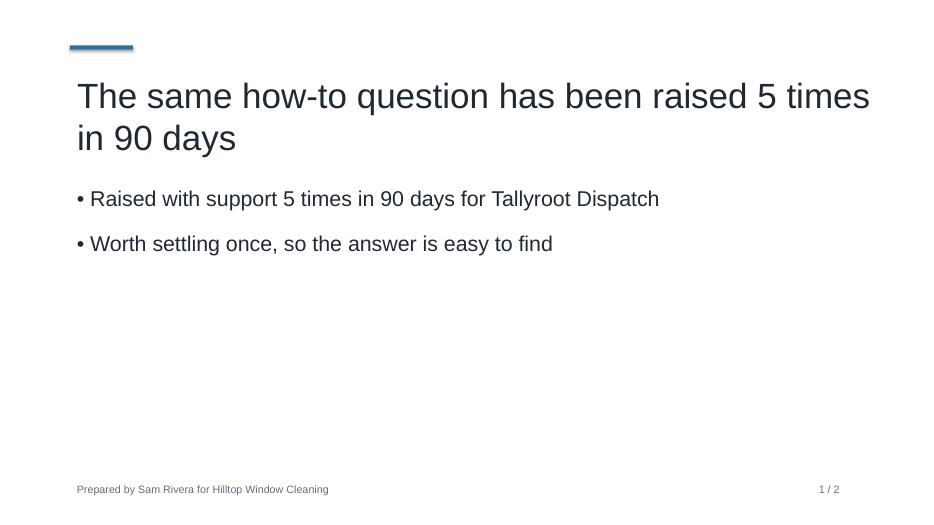
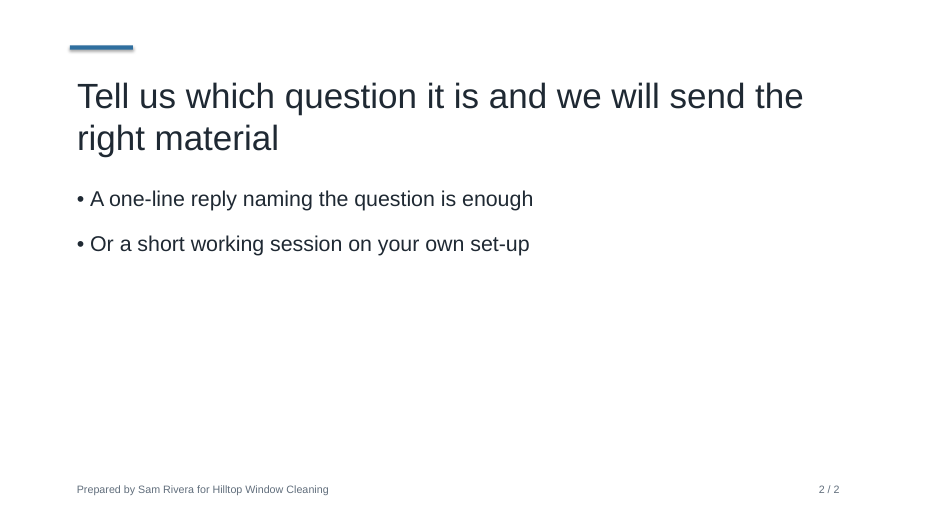
Download .pptx (customer copy) · Download PDF · Deck spec (what the agent wrote) · The email it goes with · The agent's plan · Verifier verdict
Source: decks/001TR00320000DUMMY-crew-groups.deck.json written by the engagement-drafter; laid out by scripts/render_deck.py; previews by scripts/deck_previews.py; verdict recorded by the evidence-verifier.
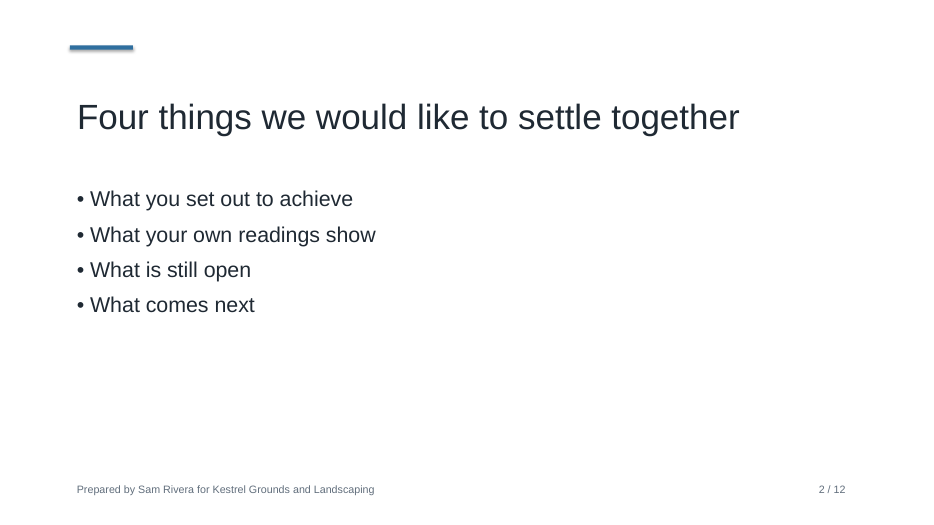
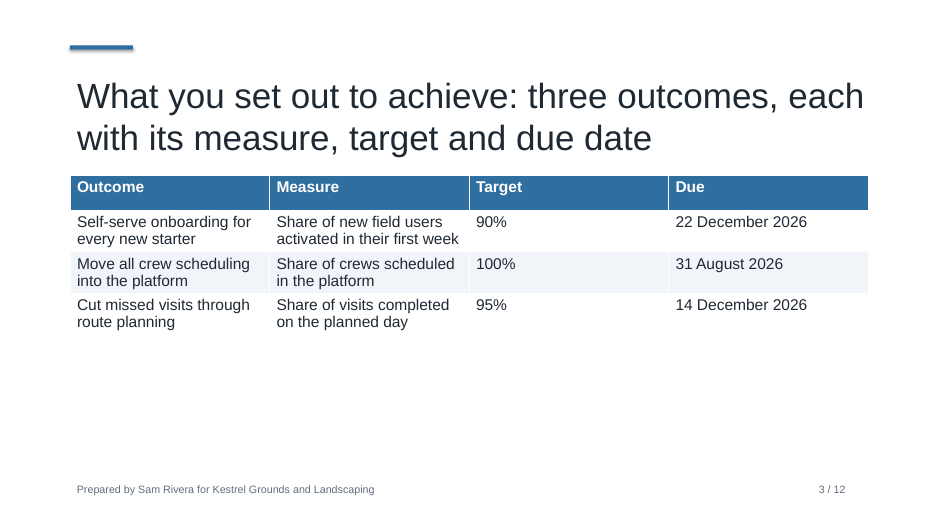
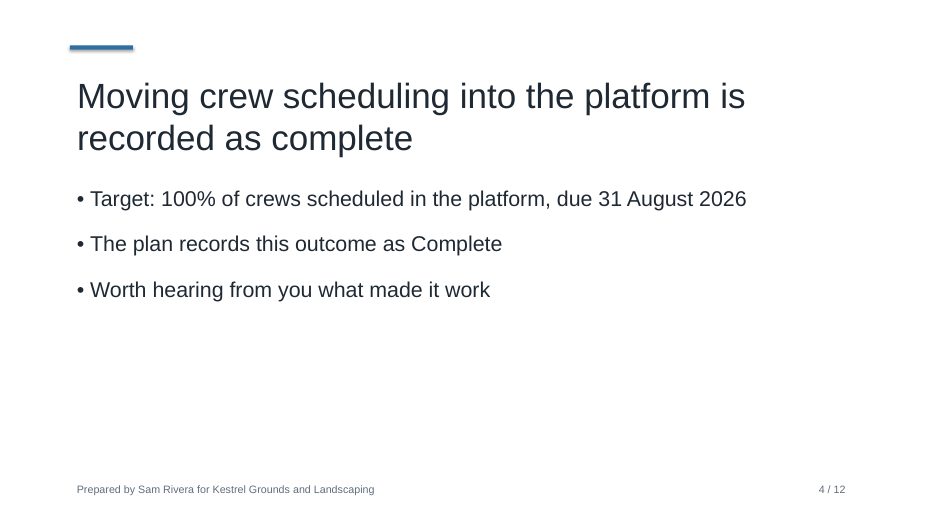
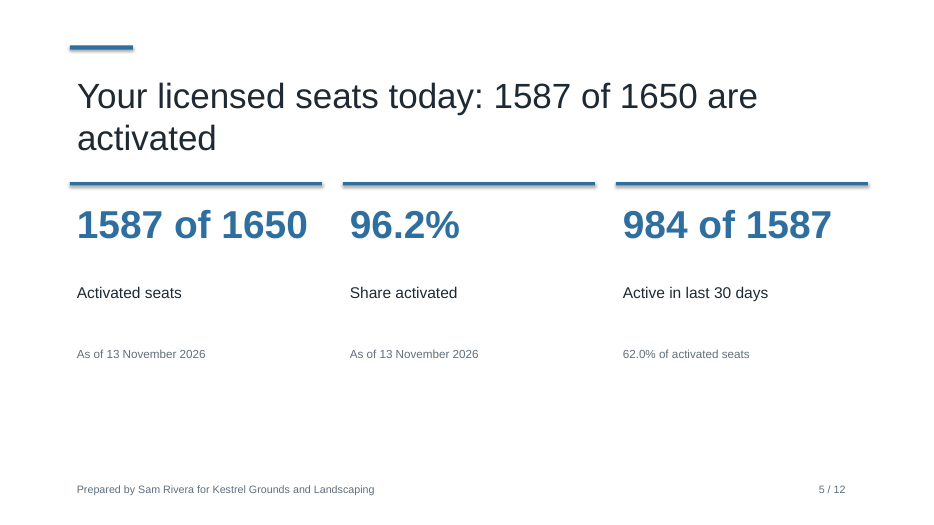
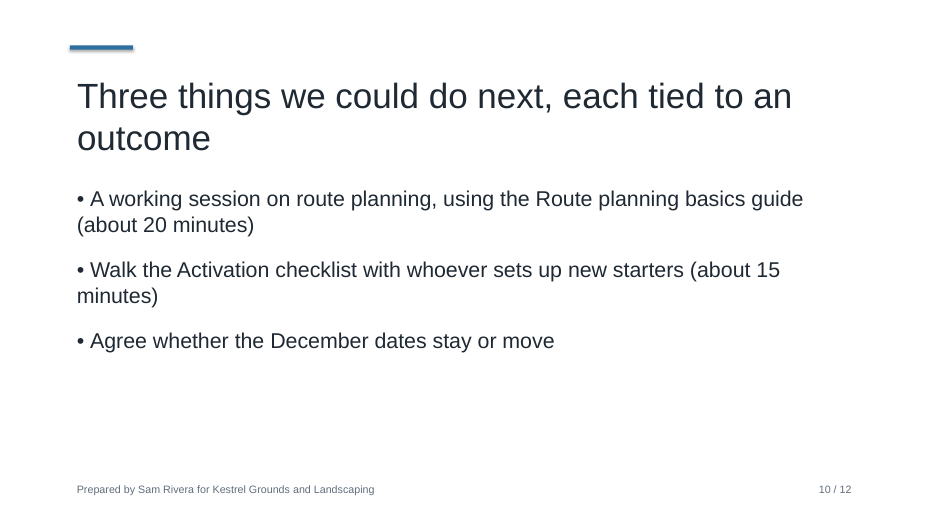
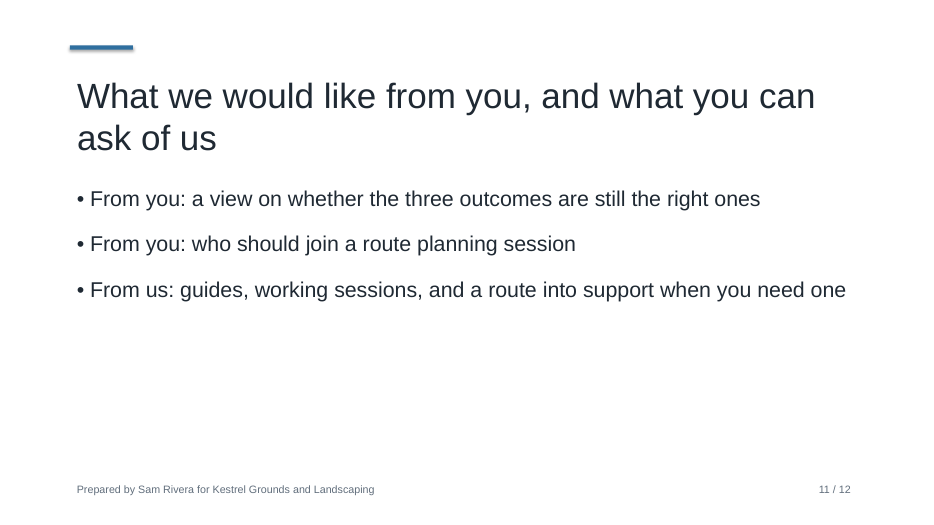
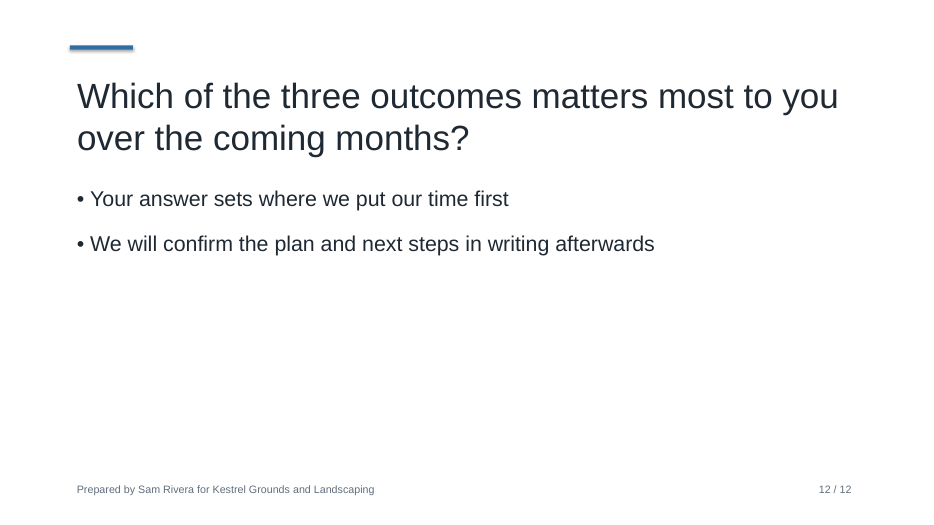
Kestrel Grounds and Landscaping: review deck, 12 slides, plus 2 for the CSM only
Verifier: pass Held for the CSM: never sent
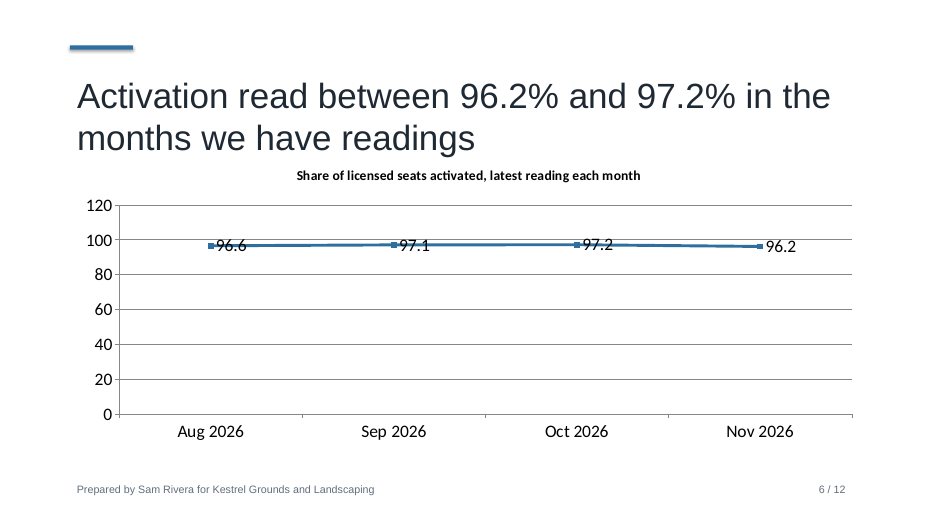
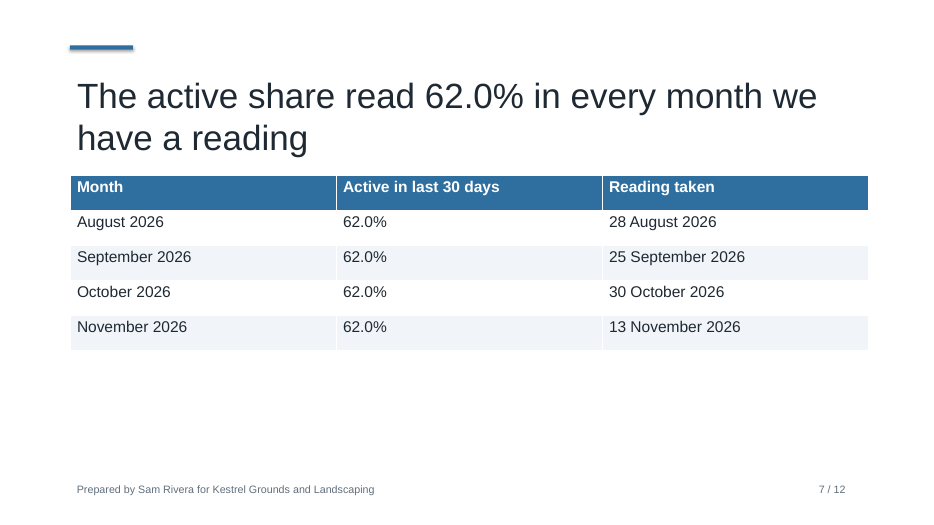
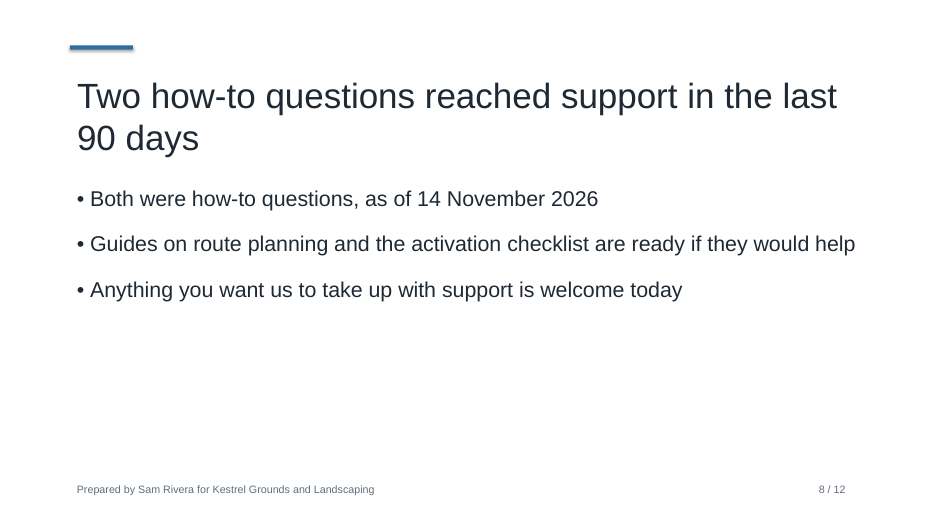
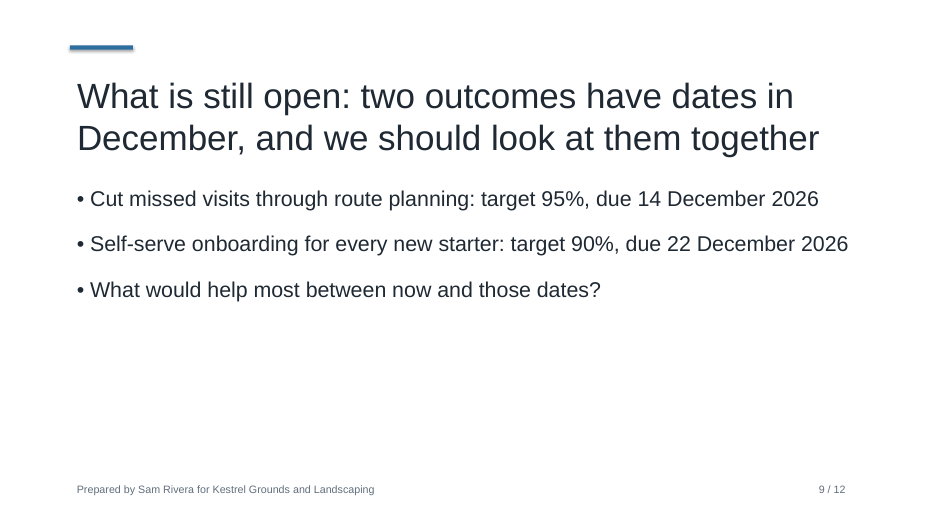
What it is for. Walk Kestrel through the three outcomes they set, what their own readings show against them, and agree what the next stretch should aim at.
Why this shape. A three-objective plan exists, one is complete, and two readings run across four months. Nothing is being sold and the growth conversation is closed. Left out on purpose: Status wording on the route-planning objective (not customer-safe), owners (not in export), ticket counts per period (not assessed), renewal timing, risk and health scores, the survey score, and any product they do not own. The timesheets guide (kept for the CSM to offer in conversation).
First check: fail The verifier stopped the first version of this draft and deck: J1: Slide 6 speaker note says a seasonality note on file puts 60-65% as expected for this period (appendix). No fact on the sheet records it (it exists only in the account metrics file), no listed fact carries it, and the appendix does not contain it, so the cross-reference is false. The recorded no… The drafter revised it once, and the verifier then passed the version shown here. The first verdict.
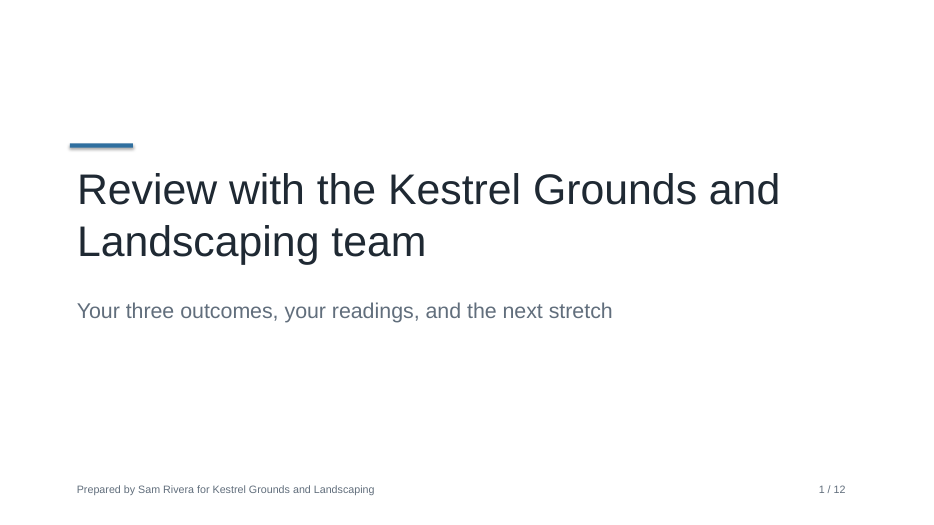
Download .pptx (customer copy) · Download PDF · Deck spec (what the agent wrote) · The note to the CSM it goes with · The agent's plan · Verifier verdict
Source: decks/001TR00020000DUMMY-review.deck.json written by the engagement-drafter; laid out by scripts/render_deck.py; previews by scripts/deck_previews.py; verdict recorded by the evidence-verifier.
Where the drafter chose email only
On the same demo data the drafter judged an email carried everything for these accounts, and wrote its reasons in the plan (the “Format” thinking step). Declining a deck is a result, not a failure.